
You might think dietary supplements exist in an unregulated gray zone, free from government oversight. That’s a dangerous misconception. While supplements aren’t regulated like prescription drugs, they operate under specific federal laws designed to protect your health. Understanding how supplements are regulated helps you make safer choices in a market where approximately 50,000 adverse events occur yearly. This article breaks down the legal framework governing supplements, explains why regulation matters for your safety, and provides practical guidance for navigating supplement purchases confidently.
Table of Contents
-
Why Regulation Protects Your Health: Risks From Unsafe Supplements
-
The Balance Of Access And Safety: Industry Perspectives And Regulatory Challenges
Key takeaways
Point Details
Legal classification Supplements are regulated as foods under DSHEA 1994, not drugs requiring pre-approval
FDA oversight role FDA monitors safety post-market through inspections, recalls, and adverse event reporting
Consumer protection Regulations prevent adulteration, contamination, and false health claims
High-risk categories Weight-loss and sexual enhancement supplements show elevated adulteration rates
Safety verification Look for GMP compliance and third-party testing certifications when purchasing
How supplements are regulated under DSHEA
The Dietary Supplement Health and Education Act of 1994 fundamentally changed how America approaches supplement oversight. This legislation classifies supplements as a food category rather than pharmaceutical products, creating a distinct regulatory pathway that balances consumer access with safety requirements. Unlike prescription medications that require years of clinical trials and FDA approval before reaching pharmacy shelves, supplements can enter the market without pre-approval as long as manufacturers follow specific rules.
Manufacturers bear primary responsibility for ensuring their products are safe before sale. They must implement good manufacturing practices that prevent contamination, maintain quality control, and accurately label ingredients. These requirements apply to every facility producing supplements, from massive pharmaceutical companies to small specialty manufacturers. The FDA conducts periodic inspections to verify compliance, but the initial burden of safety assurance rests with the companies themselves.
The framework includes several critical guardrails:
-
New Dietary Ingredients introduced after 1994 require manufacturers to submit safety evidence to FDA at least 75 days before marketing
-
Products cannot make disease claims like treating, curing, or preventing specific medical conditions
-
Labels must accurately list all ingredients, serving sizes, and supplement facts panels
-
Companies must report serious adverse events to FDA within 15 days of receiving them
-
Manufacturing facilities must follow current good manufacturing practice regulations
Pro Tip: Check if a supplement contains New Dietary Ingredients by reviewing the FDA’s publicly available NDI notification list, which helps you identify products with recent safety evaluations.
The post-market surveillance model means FDA focuses enforcement efforts after products reach consumers. Inspectors examine manufacturing facilities, test products for contamination or mislabeling, and investigate consumer complaints. When violations occur, FDA can issue warning letters, mandate recalls, or pursue legal action including product seizures. This approach differs dramatically from pharmaceutical regulation, where extensive pre-market testing prevents unsafe drugs from ever reaching patients.
Supplements occupy a unique middle ground in health product regulation. They’re not as strictly controlled as prescription medications, yet they face more oversight than conventional foods. Understanding this distinction helps explain why you can walk into any store and purchase exercise supplements without a doctor’s prescription, while still benefiting from federal safety standards that protect against the most serious risks.
Why regulation protects your health: risks from unsafe supplements
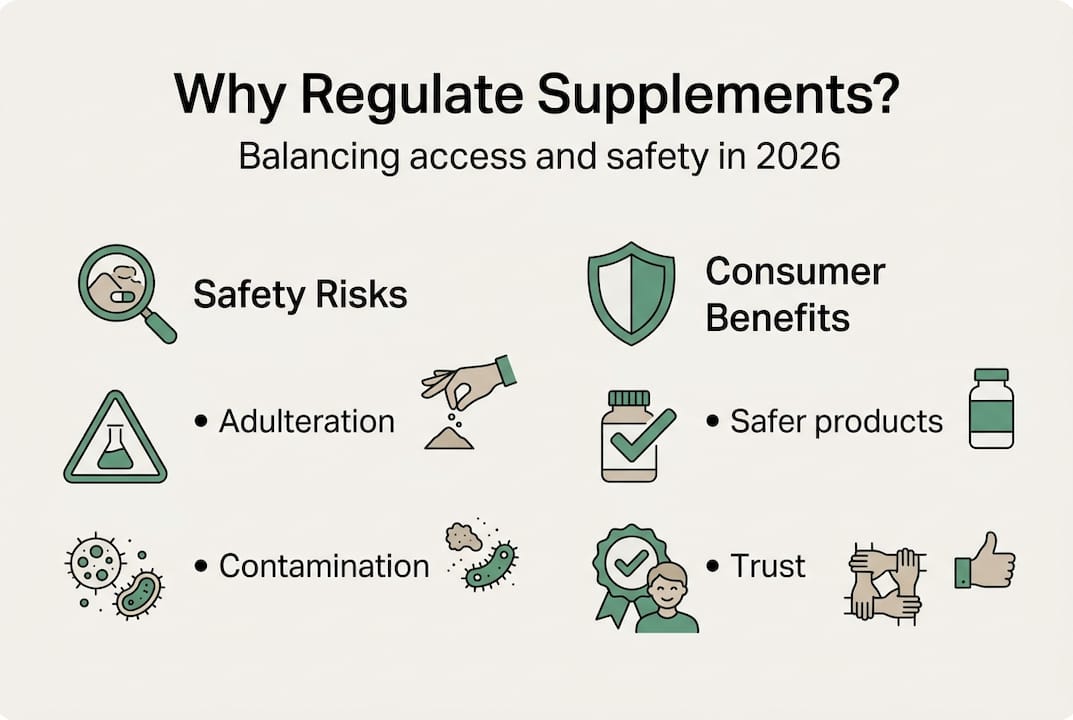
The supplement industry’s growth has brought genuine health risks that justify regulatory oversight. FDA testing reveals thousands of tainted supplements containing hidden pharmaceutical ingredients, particularly in weight-loss and sexual enhancement categories. These adulterations aren’t minor labeling errors but deliberate contamination with prescription drugs that can cause serious harm when combined with medications or taken by people with underlying health conditions.

Liver damage represents one of the most concerning supplement-related health risks. Research indicates that up to 20% of acute liver injuries link to herbal and dietary supplements, a rate that has increased as supplement use has grown. These hepatotoxic reactions can range from mild enzyme elevations to acute liver failure requiring transplantation. The challenge lies in identifying problematic products before widespread harm occurs, since symptoms may not appear until significant damage has accumulated.
Consider the scope of supplement-related adverse events:
Risk Category Annual Impact Primary Concerns
Adverse events reported ~50,000 cases Includes hospitalizations and serious reactions
Liver injuries 20% of acute cases Can progress to liver failure
Tainted products identified Thousands yearly Hidden drugs, contaminants, banned substances
Emergency visits 23,000+ annually Mostly cardiovascular and weight-loss products
Weight-loss supplements deserve special scrutiny. FDA analysis shows these products have particularly high adulteration rates, often containing undeclared stimulants, diuretics, or even withdrawn pharmaceutical ingredients. The appeal of rapid weight loss drives consumers toward products making exaggerated claims, creating a profitable market for unscrupulous manufacturers willing to cut corners or deliberately spike formulas with active drugs.
Since 2007, manufacturers must report serious adverse events to FDA, creating a surveillance system that helps identify dangerous products. This requirement transformed supplement safety monitoring by establishing a formal reporting pathway similar to pharmaceutical adverse event systems. When patterns emerge, FDA can investigate specific products, issue public warnings, or mandate recalls before additional consumers suffer harm.
“The post-market surveillance system relies on timely adverse event reporting to identify safety signals and protect public health from supplement-related risks.”
The 2004 ephedra ban demonstrates how regulation responds to documented risks. After linking ephedra-containing supplements to cardiovascular events and deaths, FDA prohibited its sale, marking the first time the agency banned a dietary supplement ingredient under DSHEA authority. This action required extensive documentation of harm, illustrating both the regulatory system’s ability to remove dangerous products and the challenges of acting without pre-market safety data.
Regulatory oversight also addresses contamination risks from heavy metals, pesticides, and microbial pathogens. Manufacturing facilities that ignore good manufacturing practices can produce supplements contaminated with lead, mercury, or dangerous bacteria. Regular inspections and testing requirements help prevent these quality failures from reaching consumers, though the system isn’t perfect and contaminated products occasionally slip through.
Understanding these risks doesn’t mean avoiding all supplements. Rather, it highlights why regulatory frameworks matter and why consumers should favor products from manufacturers who exceed minimum requirements. Companies that invest in quality control, third-party testing, and transparent labeling demonstrate commitment to safety that goes beyond legal obligations. When you’re considering products like weight-loss supplements, these quality indicators become essential selection criteria.
The balance of access and safety: industry perspectives and regulatory challenges
DSHEA emerged from intense political debate in the early 1990s when FDA proposed stricter supplement regulations. Consumer advocacy groups, supplement manufacturers, and health freedom organizations mobilized massive opposition, arguing that Americans should maintain access to vitamins, minerals, and herbs without pharmaceutical-style restrictions. The resulting legislation reflected a compromise between access and oversight, creating a framework that preserved market availability while establishing basic safety standards.
The supplement market has exploded since 1994, growing from a niche industry to a sector exceeding $70 billion annually. Approximately 74 to 75 percent of American adults now use dietary supplements regularly, incorporating them into daily health routines for everything from basic nutrition to targeted wellness goals. This widespread adoption reflects both increased health consciousness and aggressive marketing by an industry that has learned to operate effectively within DSHEA’s parameters.
Industry stakeholders generally support the current regulatory structure, arguing it appropriately balances safety with innovation. Supplement manufacturers contend that drug-style pre-approval requirements would:
-
Dramatically increase costs, making many products economically unviable
-
Restrict consumer access to beneficial supplements with long safety histories
-
Stifle innovation in natural product research and development
-
Create barriers that favor large pharmaceutical companies over smaller supplement specialists
-
Impose unnecessary bureaucracy on products that aren’t intended to treat diseases
Critics from public health and consumer safety organizations see significant gaps in current law. They advocate for DSHEA 2.0 reforms that would strengthen oversight without completely abandoning the food-based regulatory model. Proposed improvements include mandatory product listing before market entry, enhanced adverse event surveillance systems, stricter enforcement of New Dietary Ingredient requirements, and increased FDA resources for inspections and testing.
Pro Tip: Research whether supplement manufacturers voluntarily participate in third-party certification programs, which often impose stricter standards than federal minimums and demonstrate commitment to quality.
The ephedra ban in 2004 illustrates both regulatory capabilities and limitations under DSHEA. FDA successfully removed a dangerous ingredient from the market, but only after documented deaths and cardiovascular events accumulated sufficient evidence. The process took years and required extensive legal proceedings, highlighting how the post-market model delays protective action compared to pre-market approval systems that prevent risky products from ever reaching consumers.
Compare regulatory approaches:
Aspect Current DSHEA Model Proposed Reform Model
Market entry Post-market surveillance Pre-market product listing
Safety burden Manufacturer responsibility Shared manufacturer and FDA review
NDI compliance Voluntary notification Mandatory approval process
Adverse events Serious event reporting only Expanded surveillance system
Enforcement Reactive to identified problems Proactive risk assessment
Regulatory debates often overlook the practical challenges FDA faces with limited resources. The agency oversees tens of thousands of supplement products with a relatively small staff compared to pharmaceutical divisions. Prioritizing enforcement actions requires focusing on the highest-risk products and most egregious violations, leaving many potential issues unaddressed. Increased funding could expand inspection frequency and testing capabilities, but budget constraints limit regulatory reach.
The tension between access and safety will continue shaping supplement regulation. Consumers want convenient access to products supporting their health goals, while also deserving protection from adulterated, contaminated, or misleadingly marketed supplements. Finding the optimal balance requires ongoing dialogue between regulators, industry, health professionals, and consumers. Products like strength building supplements benefit from this regulatory framework when manufacturers embrace quality standards that exceed minimum legal requirements.
How to choose safe supplements: what you need to know
Navigating the supplement market safely requires understanding which quality indicators actually matter. Good manufacturing practice certification represents the baseline standard every legitimate manufacturer should meet. GMP requirements ensure facilities maintain sanitary conditions, implement quality control procedures, and accurately identify ingredients. When you see GMP certification on labels or company websites, it signals compliance with federal manufacturing standards designed to prevent contamination and ensure product consistency.
Third-party testing adds an extra verification layer beyond manufacturer claims. Independent laboratories analyze supplements to confirm they contain listed ingredients at stated potencies without harmful contaminants. Organizations like NSF International, USP, and ConsumerLab provide certification programs with rigorous testing protocols. These seals indicate products underwent scrutiny by entities with no financial stake in passing specific items, offering greater confidence than manufacturer testing alone.
Avoid high-risk supplement categories that consistently show elevated problems:
-
Weight-loss products with proprietary blends hiding ingredient amounts
-
Sexual enhancement supplements promising drug-like effects
-
Bodybuilding products claiming extreme muscle gains
-
Supplements marketed with disease treatment claims
-
Products sold primarily through spam emails or suspicious websites
-
Items with prices far below comparable products from reputable brands
Pro Tip: Before purchasing any supplement, search FDA’s warning letter database and recall lists to check if the manufacturer or specific product has faced enforcement actions.
Adverse event reporting helps FDA identify dangerous products and protect other consumers. If you experience serious side effects from a supplement, report them through the FDA’s Safety Reporting Portal or MedWatch program. Serious events include hospitalizations, life-threatening reactions, permanent disability, birth defects, or required medical intervention to prevent serious harm. Your report contributes to the surveillance system that triggers investigations and potential recalls.
Stay informed about banned ingredients and ongoing safety concerns. FDA maintains lists of prohibited substances and regularly updates warnings about problematic products. Ingredients like ephedra, DMAA, and certain stimulants have been banned due to safety risks, yet occasionally appear in supplements from manufacturers ignoring regulations. Checking ingredient lists against FDA’s prohibited substance database helps you avoid products containing illegal components.
Label scrutiny reveals important safety information:
-
Supplement Facts panel listing all ingredients with amounts
-
Manufacturer contact information for questions or adverse event reports
-
Lot numbers enabling product tracking if recalls occur
-
Expiration or best-by dates indicating product stability timeframes
-
Disclaimers clarifying the product isn’t intended to diagnose, treat, cure, or prevent disease
-
Warnings about potential side effects or interactions with medications
Healthy skepticism serves you well when evaluating supplement claims. If marketing promises sound too good to be true, they probably are. Supplements can support health and fill nutritional gaps, but they aren’t magic bullets that replace proper diet, exercise, or medical treatment. Be especially wary of products claiming to work as well as prescription drugs or promising rapid, dramatic results without lifestyle changes.
Consult healthcare providers before starting new supplements, particularly if you take medications or have health conditions. Drug-supplement interactions can reduce medication effectiveness or cause dangerous side effects. Your doctor or pharmacist can identify potential problems and help you make informed decisions about which supplements make sense for your situation. This professional guidance becomes especially important with products affecting cardiovascular health, blood sugar, or bleeding risk.
When exploring options for specific health goals, use resources that provide evidence-based evaluations. Platforms offering detailed reviews help you compare products within categories like immune support supplements, examining ingredient quality, dosing, manufacturer reputation, and scientific backing. These comprehensive assessments save you time researching individual products while helping you identify options most likely to deliver genuine benefits safely. Understanding how supplements work synergistically with exercise and nutrition further optimizes your approach to supplementation.
Explore trusted supplement reviews and rankings
Now that you understand supplement regulation and safety considerations, finding specific products that meet quality standards becomes your next step. RankOfSupplements.com provides science-backed reviews and rankings across popular supplement categories, helping you identify options that combine efficacy with safety. Our detailed evaluations examine manufacturing quality, ingredient transparency, and scientific evidence supporting product claims.
Whether you’re interested in strength building supplements, immune support formulas, or metabolic products, our comprehensive rankings compare top options within each category. We prioritize products from manufacturers demonstrating commitment to quality through third-party testing, GMP compliance, and transparent labeling. These resources complement your regulatory knowledge with practical product insights, streamlining your path to safe, effective supplementation.
Frequently asked questions about supplement regulation
What does DSHEA regulation mean for consumers?
DSHEA classifies supplements as foods rather than drugs, allowing market access without pre-approval while requiring manufacturers to ensure safety and accurate labeling. This means you can purchase supplements freely, but you also bear more responsibility for evaluating product quality since FDA doesn’t test supplements before sale.
How does FDA enforce supplement safety after products reach the market?
FDA conducts facility inspections, tests products for contamination or mislabeling, investigates adverse event reports, and issues warning letters or recalls when violations occur. The agency can also pursue legal action including product seizures and criminal prosecution for serious violations that endanger public health.
What supplement categories carry the highest safety risks?
Weight-loss and sexual enhancement supplements show the highest adulteration rates, often containing hidden pharmaceutical ingredients. Bodybuilding products and supplements promising disease treatment also warrant extra caution due to frequent quality issues and misleading claims.
How can consumers report side effects from supplements?
Report serious adverse events through FDA’s Safety Reporting Portal or MedWatch program, available online or by phone at 1-800-FDA-1088. Include product details, lot numbers, where purchased, and specific symptoms experienced to help FDA investigate potential safety issues.
Are all supplements tested before they can be sold?
No, supplements don’t require pre-market approval or testing by FDA. Manufacturers must ensure safety and follow good manufacturing practices, but products can enter the market without government review unless they contain New Dietary Ingredients introduced after 1994, which require safety notifications.
Why can’t supplements claim to treat diseases?
DSHEA prohibits disease claims to maintain the distinction between supplements and drugs. Products making such claims would legally become drugs requiring FDA approval through clinical trials. Supplements can make structure-function claims about supporting normal body functions but cannot promise to diagnose, treat, cure, or prevent specific diseases.